
Future-of-the-LAMP-Stack-in-Pakistan-Embracing-Open-Source-Technologies

Future of the LAMP Stack in Pakistan: Embracing Open Source Technologies

The technology landscape in Pakistan has witnessed significant growth and evolution over the years. As the country embraces digital transformation and the demand for web development continues to rise, it is essential to assess the future of various technology stacks, including the popular LAMP stack. In this article, we will explore the future prospects of the LAMP stack in Pakistan and how it can continue to play a vital role in the country’s web development ecosystem.

Understanding the LAMP Stack:

Before delving into the future, let’s briefly recap what the LAMP stack entails. LAMP is an acronym for Linux, Apache, MySQL, and PHP. It is an open-source technology stack that has been widely adopted for web development globally. Each component of the LAMP stack contributes to the creation of dynamic and robust web applications:

1. Linux: Linux, an open-source operating system, forms the foundation of the LAMP stack. Its stability, security, and flexibility make it an ideal choice for web development projects.

2. Apache: Apache, the most popular open-source web server software, powers a vast majority of websites on the internet. Its reliability, scalability, and extensive features make it a go-to option for developers.

3. MySQL: MySQL, an open-source relational database management system (RDBMS), offers a robust and efficient way to store and retrieve data for web applications. Its versatility and wide usage have made it a popular choice for developers.

4. PHP: PHP, a server-side scripting language, enables the execution of dynamic web pages and the development of interactive web applications. Its simplicity, ease of use, and extensive community support have contributed to its widespread adoption.

Current State of the LAMP Stack in Pakistan:

The LAMP stack has been a preferred choice for web development in Pakistan for many years. Its open-source nature, cost-effectiveness, and extensive community support have made it accessible and appealing to developers and businesses across the country. Many web development companies, startups, and freelance developers have relied on the LAMP stack to build a wide range of applications, from simple websites to complex web-based systems.

The LAMP stack’s popularity in Pakistan can be attributed to several factors:

1. Affordability: As an open-source stack, the LAMP stack eliminates the need for expensive licenses, making it more affordable for developers and businesses, especially those operating on a limited budget.

2. Flexibility and Customization: The LAMP stack offers developers the freedom to customize and tailor the components according to their specific project requirements. This flexibility allows for greater innovation and adaptability.

3. Strong Community Support: The LAMP stack has a thriving community of developers in Pakistan who actively contribute to its growth and improvement. This community-driven approach ensures continuous updates, bug fixes, and a wealth of resources available for developers.

4. Local Skillset: Many developers in Pakistan are well-versed in PHP and the LAMP stack, thanks to its popularity and the availability of training resources and courses. The abundance of skilled LAMP developers in the country has contributed to the stack’s wide adoption.

The Future of the LAMP Stack in Pakistan:

As the technology landscape evolves, it is natural to question the future of the LAMP stack in Pakistan. While newer technologies and frameworks have emerged, the LAMP stack continues to be relevant and holds considerable potential for the future. Here are some factors to consider:

1. Open-Source Dominance: Open-source technologies, including the LAMP stack, have gained immense popularity worldwide due to their flexibility, cost-effectiveness, and community support. Pakistan, with its growing technology ecosystem, is likely to continue embracing open-source technologies, making the LAMP stack a viable choice for developers.

2. Legacy Systems and Expertise: Many existing web applications and systems in Pakistan are built on the LAMP stack. These legacy systems will require ongoing maintenance, updates, and improvements, ensuring a continued demand for LAMP developers and expertise.

3. Education and Training: The availability of PHP and LAMP stack education and training resources in Pakistan contributes to a strong pool of skilled developers. Educational institutions, coding bootcamps, and online platforms continue to offer courses and certifications in PHP and the LAMP stack, ensuring a steady supply of skilled professionals.

4. Diversification of Stacks: While the LAMP stack remains a popular choice, it is worth noting that the technology landscape is diversifying. Developers are exploring alternative stacks and frameworks to leverage new functionalities and meet evolving project requirements. However, this diversification does not necessarily diminish the significance of the LAMP stack; rather, it opens up opportunities for hybrid stacks and the integration of LAMP components with newer technologies.

5. Cloud and DevOps Integration: The integration of cloud computing and DevOps practices is gaining momentum in Pakistan. The LAMP stack can seamlessly align with cloud platforms and DevOps methodologies, allowing for greater scalability, reliability, and efficiency in web development projects.

6. Emerging Technologies: The LAMP stack can adapt and evolve with emerging technologies. For example, advancements in the PHP ecosystem, such as the introduction of PHP 8 and frameworks like Laravel, have rejuvenated the stack and ensured its relevance in modern web development practices.

Conclusion:

The LAMP stack has played a vital role in Pakistan’s web development landscape and will likely continue to do so in the foreseeable future. Its affordability, flexibility, and strong community support make it an attractive choice for developers and businesses in the country. As the technology ecosystem evolves, the LAMP stack will adapt and integrate with emerging technologies, ensuring its relevance and longevity. Developers in Pakistan can continue to leverage the LAMP stack’s strengths while exploring complementary technologies to meet evolving project requirements. With its open-source nature and the abundant pool of skilled developers, the LAMP stack remains a valuable asset for the web development industry in Pakistan.


LAMP-Stack-vs

Future of the LAMP Stack in Pakistan: Embracing Open Source Technologies

The technology landscape in Pakistan has witnessed significant growth and evolution over the years. As the country embraces digital transformation and the demand for web development continues to rise, it is essential to assess the future of various technology stacks, including the popular LAMP stack. In this article, we will explore the future prospects of the LAMP stack in Pakistan and how it can continue to play a vital role in the country’s web development ecosystem.

Understanding the LAMP Stack:

Before delving into the future, let’s briefly recap what the LAMP stack entails. LAMP is an acronym for Linux, Apache, MySQL, and PHP. It is an open-source technology stack that has been widely adopted for web development globally. Each component of the LAMP stack contributes to the creation of dynamic and robust web applications:

1. Linux: Linux, an open-source operating system, forms the foundation of the LAMP stack. Its stability, security, and flexibility make it an ideal choice for web development projects.

2. Apache: Apache, the most popular open-source web server software, powers a vast majority of websites on the internet. Its reliability, scalability, and extensive features make it a go-to option for developers.

3. MySQL: MySQL, an open-source relational database management system (RDBMS), offers a robust and efficient way to store and retrieve data for web applications. Its versatility and wide usage have made it a popular choice for developers.

4. PHP: PHP, a server-side scripting language, enables the execution of dynamic web pages and the development of interactive web applications. Its simplicity, ease of use, and extensive community support have contributed to its widespread adoption.

Current State of the LAMP Stack in Pakistan:

The LAMP stack has been a preferred choice for web development in Pakistan for many years. Its open-source nature, cost-effectiveness, and extensive community support have made it accessible and appealing to developers and businesses across the country. Many web development companies, startups, and freelance developers have relied on the LAMP stack to build a wide range of applications, from simple websites to complex web-based systems.

The LAMP stack’s popularity in Pakistan can be attributed to several factors:

1. Affordability: As an open-source stack, the LAMP stack eliminates the need for expensive licenses, making it more affordable for developers and businesses, especially those operating on a limited budget.

2. Flexibility and Customization: The LAMP stack offers developers the freedom to customize and tailor the components according to their specific project requirements. This flexibility allows for greater innovation and adaptability.

3. Strong Community Support: The LAMP stack has a thriving community of developers in Pakistan who actively contribute to its growth and improvement. This community-driven approach ensures continuous updates, bug fixes, and a wealth of resources available for developers.

4. Local Skillset: Many developers in Pakistan are well-versed in PHP and the LAMP stack, thanks to its popularity and the availability of training resources and courses. The abundance of skilled LAMP developers in the country has contributed to the stack’s wide adoption.

The Future of the LAMP Stack in Pakistan:

As the technology landscape evolves, it is natural to question the future of the LAMP stack in Pakistan. While newer technologies and frameworks have emerged, the LAMP stack continues to be relevant and holds considerable potential for the future. Here are some factors to consider:

1. Open-Source Dominance: Open-source technologies, including the LAMP stack, have gained immense popularity worldwide due to their flexibility, cost-effectiveness, and community support. Pakistan, with its growing technology ecosystem, is likely to continue embracing open-source technologies, making the LAMP stack a viable choice for developers.

2. Legacy Systems and Expertise: Many existing web applications and systems in Pakistan are built on the LAMP stack. These legacy systems will require ongoing maintenance, updates, and improvements, ensuring a continued demand for LAMP developers and expertise.

3. Education and Training: The availability of PHP and LAMP stack education and training resources in Pakistan contributes to a strong pool of skilled developers. Educational institutions, coding bootcamps, and online platforms continue to offer courses and certifications in PHP and the LAMP stack, ensuring a steady supply of skilled professionals.

4. Diversification of Stacks: While the LAMP stack remains a popular choice, it is worth noting that the technology landscape is diversifying. Developers are exploring alternative stacks and frameworks to leverage new functionalities and meet evolving project requirements. However, this diversification does not necessarily diminish the significance of the LAMP stack; rather, it opens up opportunities for hybrid stacks and the integration of LAMP components with newer technologies.

5. Cloud and DevOps Integration: The integration of cloud computing and DevOps practices is gaining momentum in Pakistan. The LAMP stack can seamlessly align with cloud platforms and DevOps methodologies, allowing for greater scalability, reliability, and efficiency in web development projects.

6. Emerging Technologies: The LAMP stack can adapt and evolve with emerging technologies. For example, advancements in the PHP ecosystem, such as the introduction of PHP 8 and frameworks like Laravel, have rejuvenated the stack and ensured its relevance in modern web development practices.

Conclusion:

The LAMP stack has played a vital role in Pakistan’s web development landscape and will likely continue to do so in the foreseeable future. Its affordability, flexibility, and strong community support make it an attractive choice for developers and businesses in the country. As the technology ecosystem evolves, the LAMP stack will adapt and integrate with emerging technologies, ensuring its relevance and longevity. Developers in Pakistan can continue to leverage the LAMP stack’s strengths while exploring complementary technologies to meet evolving project requirements. With its open-source nature and the abundant pool of skilled developers, the LAMP stack remains a valuable asset for the web development industry in Pakistan.
Python-for-Automation-Streamlining-Processes-and-Boosting-Efficiency

Python for Automation: Streamlining Processes and Boosting Efficiency

Introduction 

In today’s fast-paced world, automation plays a crucial role in enhancing productivity and efficiency. Python, with its simplicity, versatility, and extensive library support, has emerged as a powerful tool for automation tasks. In this article, we will explore the world of Python for automation, discussing its applications across various domains. From web scraping and task scheduling to GUI automation and system administration, Python empowers users to automate repetitive processes and focus on higher-value tasks. Whether you’re a developer, system administrator, or business professional, understanding Python’s capabilities for automation will unlock new opportunities to streamline workflows and boost productivity.

1. Introduction to Automation and Python

This section will provide an overview of automation, its significance in today’s digital age, and the benefits it offers. It will explain how Python, as a versatile scripting language, simplifies the automation process. The section will also highlight Python’s key features and strengths that make it an ideal choice for automation tasks.

2. Web Scraping and Data Automation

Web scraping is a widely used automation technique, and Python excels in this domain. This section will delve into web scraping using Python, covering popular libraries like BeautifulSoup and Scrapy. It will explain how Python enables the extraction of data from websites, APIs, and databases, automating data collection and analysis for various purposes such as market research, data-driven decision-making, and competitor analysis.

3. Task Scheduling and Batch Processing

Python provides efficient solutions for task scheduling and batch processing. This section will discuss how Python’s built-in libraries, such as “sched” and “time,” enable users to schedule recurring tasks, automate data processing, and perform batch operations. It will also explore third-party libraries like Celery and APScheduler that provide advanced task scheduling capabilities.

4. GUI Automation

Python’s versatility extends to graphical user interface (GUI) automation. This section will discuss libraries like PyAutoGUI and Selenium, which allow users to automate interactions with desktop applications, web browsers, and user interfaces. It will cover use cases such as automated testing, data entry automation, and UI-driven processes, showcasing Python’s capabilities for streamlining repetitive GUI tasks.

5. System Administration and Infrastructure Automation

Python is widely used for system administration and infrastructure automation. This section will explore how Python simplifies tasks like file management, network automation, server provisioning, and configuration management. It will discuss popular libraries like Paramiko, Fabric, and Ansible, which facilitate seamless automation of administrative tasks, server deployments, and infrastructure management.

6. Workflow Integration and API Automation

Python’s flexibility allows for seamless integration with existing workflows and automation of API-based processes. This section will discuss how Python can interact with various APIs using libraries like Requests and Tweepy, enabling automation of tasks such as data retrieval, social media posting, and interaction with external services.

7. Best Practices and Considerations 

This section will provide best practices and considerations for Python automation projects. It will cover topics such as code modularity, error handling, logging, security considerations, and maintaining scalability and reliability. It will also highlight the importance of testing and version control in automation projects.

8. Future Trends and Developments

The field of automation is constantly evolving, and Python remains at the forefront of this evolution. This section will discuss emerging trends and technologies in automation, such as robotic process automation (RPA), machine learning-driven automation, and cloud-based automation. It will also touch upon the growing adoption of Python in these areas and the potential impact on automation practices.

Conclusion

Python has emerged as a go-to language for automation, empowering individuals and organizations to streamline processes, save time, and boost productivity. From web scraping and task scheduling to GUI automation and system administration, Python’s versatility makes it an ideal choice for a wide range of automation tasks. By harnessing Python’s capabilities and understanding best practices, professionals can unlock the power of automation and drive efficiency in their workflows. Whether you’re a developer, system administrator, or business professional, embracing Python for automation opens up a world of possibilities for optimizing tasks and focusing on value-added activities.

Python-Projects-and-Startups-in-Pakistan-Driving-Innovation-and-Technological-Advancements

Python Projects and Startups in Pakistan: Driving Innovation and Technological Advancements

Introduction 

Pakistan’s technology landscape is witnessing a surge in Python projects and startups. Python’s versatility, ease of use, and extensive library ecosystem make it a popular choice among entrepreneurs and developers. In this article, we will explore the thriving world of Python projects and startups in Pakistan, highlighting innovative ideas, success stories, and the impact they are making in various industries. Whether you’re an aspiring entrepreneur or a tech enthusiast, this article will provide valuable insights into the exciting realm of Python projects and startups in Pakistan.

1. The Rise of Python Projects and Startups

The adoption of Python in Pakistan has fueled the growth of innovative projects and startups. This section will discuss the factors contributing to Python’s popularity in the startup ecosystem, such as its readability, large developer community, and extensive library support. It will also highlight how Python’s capabilities align with the requirements of modern startups, including web development, data analysis, machine learning, and automation.

2. Python Projects Making Waves

This section will showcase a selection of noteworthy Python projects originating from Pakistan. It will cover a diverse range of domains, including healthcare, education, agriculture, finance, e-commerce, and more. Each project will be explored in detail, discussing the problem it aims to solve, the technologies employed, and the impact it has had on its respective industry. Examples may include innovative applications, data-driven solutions, and platforms driving digital transformation in Pakistan.

3. Success Stories: Python-Powered Startups

Pakistan’s startup ecosystem is witnessing the rise of Python-powered ventures. This section will highlight success stories of Python startups, discussing their journey, challenges faced, and achievements. It will include startups across various sectors, such as fintech, e-commerce, healthtech, edtech, and SaaS. These success stories will inspire aspiring entrepreneurs and shed light on the potential of Python as a catalyst for startup growth and success.

4. Nurturing the Python Startup Ecosystem 

This section will delve into the initiatives and resources supporting Python startups in Pakistan. It will highlight incubators, accelerators, and co-working spaces fostering an entrepreneurial environment. Additionally, it will discuss community-driven initiatives, hackathons, and networking events that provide platforms for collaboration and knowledge sharing among startup enthusiasts. It will also touch upon government support and policies encouraging innovation and entrepreneurship in Pakistan.

5. Challenges and Opportunities 

Building a successful startup comes with its own set of challenges. This section will address some of the common challenges faced by Python startups in Pakistan, such as funding limitations, talent acquisition, market competition, and regulatory hurdles. It will also discuss the opportunities available for Python startups, including access to a large market, growing digital adoption, and the potential for international collaborations.

6. Future Outlook and Trends

The future of Python projects and startups in Pakistan is promising. This section will highlight emerging trends and technologies, such as artificial intelligence, machine learning, blockchain, and the Internet of Things (IoT), which are likely to shape the landscape of Python startups. It will also discuss the potential for cross-industry collaborations and the role of Python in driving technological advancements in Pakistan.

Conclusion 

Python projects and startups in Pakistan are driving innovation, transforming industries, and contributing to the country’s technology ecosystem. From healthcare to finance, education to agriculture, Python is enabling entrepreneurs to create impactful solutions. By showcasing success stories, discussing challenges, and highlighting the support system in place, this article has provided a comprehensive overview of the Python startup landscape in Pakistan. As Python continues to evolve and new ventures emerge, the future looks bright for aspiring entrepreneurs and tech enthusiasts seeking to make their mark in Pakistan’s thriving

Python-Job-Market-in-Pakistan-Opportunitie-Trends-and-Career-Paths

Python Job Market in Pakistan: Opportunities, Trends, and Career Paths

Introduction

The demand for Python developers has been on the rise globally, and Pakistan is no exception. In this article, we will delve into the Python job market in Pakistan, exploring the availability of job opportunities, salary trends, and potential career paths. Whether you are a seasoned professional or a novice seeking to enter the field, understanding the dynamics of the Python job market in Pakistan will provide valuable insights for your career growth.

Rising Demand for Python Developers 

The demand for Python developers in Pakistan has been increasing steadily over the years. Companies across various industries, including software development, data science, web development, automation, and artificial intelligence, are seeking professionals proficient in Python. The versatility of Python and its wide range of applications contribute to its popularity among employers. This section will provide an overview of the industries driving the demand for Python developers in Pakistan and discuss how Python’s flexibility and scalability make it an attractive choice for businesses.

Job Opportunities and Roles

The Python job market in Pakistan offers diverse opportunities for professionals with Python skills. From entry-level positions to senior roles, there are abundant job openings for Python developers, software engineers, data scientists, web developers, and consultants. This section will discuss the different roles available in the job market and the skills and qualifications required for each position. It will also highlight the specific responsibilities and challenges associated with these roles, providing readers with a comprehensive understanding of the potential career paths.

Salary Trends and Benefits

Python developers in Pakistan enjoy competitive salaries and attractive benefits. This section will delve into the salary trends across different experience levels, industries, and regions in Pakistan. It will provide insights into the factors influencing salary ranges, such as education, certifications, years of experience, industry demand, and company size. Additionally, it will explore the non-monetary benefits that companies often offer, such as flexible work hours, remote work options, and opportunities for professional growth and development.

Career Paths and Growth Opportunities 

Python offers excellent career growth opportunities in Pakistan. This section will outline the various career paths that Python developers can pursue, including specialization in areas such as data science, machine learning, web development, automation, and artificial intelligence. It will discuss the skills, certifications, and additional knowledge required to excel in each career path. Furthermore, it will explore the possibilities of career progression and the potential to become team leads, project managers, technology consultants, or even entrepreneurs in the technology sector.

Training and Learning Resources

To thrive in the Python job market, continuous learning and skill enhancement are crucial. This section will provide an overview of training and learning resources available in Pakistan, including online tutorials, courses, bootcamps, and local educational institutions offering Python-related programs. It will also highlight relevant global platforms and resources for self-study. By providing a comprehensive list of resources, readers will have access to quality learning materials to enhance their Python skills and stay competitive in the job market.

Conclusion 

The Python job market in Pakistan is flourishing, with ample opportunities for skilled professionals. The rising demand for Python developers across various industries, competitive salaries, and prospects for career growth make it an attractive field to pursue. By staying updated with the latest trends, continuously enhancing skills, and leveraging the available learning resources, individuals can position themselves for success in the Python job market. Embracing Python as a top skill opens doors to exciting career paths and empowers professionals to contribute to Pakistan’s rapidly evolving technology landscape.

Supercharging-Your-Career-in-Pakistan-with-the-Mighty-MERN-Stack

Supercharging Your Career in Pakistan with the Mighty MERN Stack

Introduction:

In recent years, the field of web development has witnessed a significant rise in demand, both globally and in Pakistan. Aspiring IT graduates aiming to secure a lucrative career in Pakistan should consider equipping themselves with the MERN stack—an amalgamation of technologies including MongoDB, Express.js, React.js, and Node.js. In this article, we will delve into the benefits of the MERN stack and how it can empower IT graduates to earn a sustainable living in Pakistan’s thriving tech industry.

1. Overview of the MERN Stack:

The MERN stack is a full-stack JavaScript framework widely adopted for building robust and scalable web applications. Comprising four essential components—MongoDB as the database, Express.js for server-side development, React.js for client-side development, and Node.js as the runtime environment—the MERN stack offers a comprehensive toolkit for developing modern, dynamic web applications.

2. Expanding Opportunities in the Web Development Market:

Pakistan’s IT industry has experienced remarkable growth in recent years, with a particular focus on web and mobile application development. By mastering the MERN stack, IT graduates can tap into the abundant opportunities available in the country’s web development market. This skill set aligns perfectly with the demand for versatile, full-stack developers sought after by startups, enterprises, and software development firms.

3. React.js and Its Relevance:

React.js, a key component of the MERN stack, has gained immense popularity for its component-based architecture and virtual DOM rendering, offering exceptional performance and seamless user experiences. With a solid understanding of React.js, graduates can leverage this powerful library to develop interactive and visually appealing front-end interfaces, making them highly desirable in the Pakistani job market.

4. Node.js and Its Significance:

Node.js, another vital component of the MERN stack, enables server-side development using JavaScript. Its non-blocking, event-driven architecture makes it ideal for building scalable and real-time applications. In Pakistan, Node.js has gained traction for its efficiency in handling concurrent requests, making IT graduates proficient in Node.js highly valuable to organizations looking to build efficient and scalable back-end systems.

5. MongoDB and Its NoSQL Advantages:

MongoDB, a popular NoSQL database, offers flexibility and scalability, making it an excellent choice for modern web applications. Compared to traditional relational databases, MongoDB’s document-based model allows developers to work with flexible schemas, adapt to evolving requirements, and handle large volumes of data efficiently. By acquiring MongoDB skills as part of the MERN stack, IT graduates can position themselves as experts in managing data storage and retrieval—a highly sought-after skill in Pakistan’s evolving tech landscape.

6. Express.js and Building Robust APIs:

Express.js serves as the back-end framework in the MERN stack, providing a streamlined way to build powerful APIs and handle routing and middleware. IT graduates proficient in Express.js can design and develop scalable APIs to communicate between front-end and back-end components, facilitating seamless data flow within web applications. This proficiency allows graduates to tackle complex server-side challenges, making them invaluable assets to businesses seeking to optimize their back-end infrastructure.

7. Versatility and Employability:

The MERN stack equips IT graduates with the ability to handle end-to-end web development, making them versatile professionals in the industry. Companies in Pakistan highly value individuals who can contribute to various aspects of the development process, from front-end interfaces to back-end functionality. With the MERN stack in their arsenal, graduates can showcase their versatility, expanding their employment prospects and commanding higher salaries.

8. Freelancing and Entrepreneurial Opportunities:

In addition to traditional employment opportunities, the MERN stack also opens avenues for freelancing and entrepreneurial ventures. As a full-stack developers proficient in the MERN stack, graduates can independently offer web development services to clients locally and globally. Pakistan has a thriving freelance market, with numerous online platforms connecting freelancers with clients worldwide. By harnessing their expertise in the MERN stack, IT graduates can embark on a freelancing career, allowing them to work remotely, choose their projects, and set their own rates. This flexibility and independence make freelancing an attractive option for individuals seeking to earn a living on their own terms.

Furthermore, the MERN stack empowers IT graduates to pursue entrepreneurial ventures. Armed with the ability to develop end-to-end web applications, graduates can create innovative digital products and services to meet market demands. Pakistan’s startup ecosystem is vibrant, with ample support and funding opportunities available for tech entrepreneurs. By leveraging their MERN stack skills, graduates can establish their startups, contribute to the country’s digital economy, and potentially achieve significant financial success.

9. Continuous Learning and Growth:

The MERN stack serves as a solid foundation for IT graduates to embark on a continuous learning journey. The web development industry is ever-evolving, with new technologies and frameworks emerging regularly. By mastering the MERN stack, graduates cultivate a mindset of continuous learning, enabling them to adapt to changing trends and stay relevant in the competitive IT landscape. This adaptability and willingness to learn are highly valued by employers, ensuring long-term career growth and opportunities for professional development.

10. Community and Support:

The MERN stack boasts a vibrant and supportive community both globally and within Pakistan. Online forums, developer communities, and open-source projects centered around the MERN stack provide ample opportunities for IT graduates to network, collaborate, and seek guidance from experienced professionals. Engaging with the community fosters knowledge sharing, exposure to best practices, and access to valuable resources, enhancing graduates’ skills and expanding their professional network.

Conclusion:

The MERN stack presents a valuable opportunity for IT graduates in Pakistan to secure a prosperous career in the web development industry. By mastering the interconnected technologies of MongoDB, Express.js, React.js, and Node.js, graduates can position themselves as versatile full-stack developers capable of handling end-to-end development projects. The demand for MERN stack expertise is growing rapidly, both within traditional employment settings and through freelancing and entrepreneurial avenues. Embracing the MERN stack not only opens doors to employment opportunities but also nurtures continuous learning, community engagement, and long-term career growth. By investing in their skills and staying abreast of industry trends, IT graduates can thrive in Pakistan’s dynamic tech landscape and build a successful and fulfilling career.

How-Wordpress-Skills-can-Benefit-Pakistani-IT-Professionals-and-Companies_v1

How WordPress Skills can Benefit Pakistani IT Professionals and Companies

WordPress is one of the most popular content management systems in the world. In Pakistan, WordPress is used extensively by businesses, organizations, and individuals to create and manage websites, making it a crucial skill for IT professionals to have. In this article, we will discuss how WordPress skills can benefit Pakistani IT professionals and companies.

High Demand for WordPress Professionals in Pakistan

  1. With the increasing use of the internet and digital technologies, the demand for WordPress professionals in Pakistan has grown significantly over the past few years. According to recent job postings on popular job portals in Pakistan, many companies are looking for WordPress developers, designers, and content managers. Having WordPress skills can make Pakistani IT professionals more marketable and attractive to potential employers, as they can demonstrate their ability to work with a widely-used platform.

Versatility of WordPress

  1. One of the biggest advantages of WordPress is its versatility. It is a platform that can be used to create a wide range of websites, from simple blogs to complex e-commerce stores. It also offers a wide range of themes and plugins that can be customized to suit specific needs. This versatility makes WordPress a popular choice for many businesses and organizations in Pakistan. By learning WordPress, IT professionals in Pakistan can create custom websites, blogs, and online stores for their clients, and provide value-added services to their employers.

Cost-Effective Solution

  1. Another significant advantage of WordPress is its cost-effectiveness. It is an open-source platform that is free to use, and many of its themes and plugins are also available for free or at a low cost. This makes WordPress a cost-effective solution for businesses and individuals who want to create a website without spending a lot of money. By using WordPress, Pakistani IT professionals can help their clients save money while still delivering high-quality websites.

Easy to Use and Learn

  1. WordPress is an easy-to-use platform, even for those who do not have extensive coding experience. It has a user-friendly interface that allows users to create and manage websites without having to write code. This ease of use makes it accessible to a wider range of users, and it can be learned quickly by IT professionals in Pakistan. Additionally, there are many online tutorials, courses, and forums available that can help IT professionals learn WordPress at their own pace.

Wide Range of Opportunities

  1. WordPress is used by a diverse range of industries and businesses, including healthcare, education, e-commerce, and non-profits. This means that IT professionals in Pakistan who have WordPress skills can find opportunities in many different fields. They can work as WordPress developers, designers, or content managers, and can specialize in a particular industry or niche. This variety of opportunities ensures that Pakistani IT professionals can find work in a field that interests them and aligns with their skills and experience.

Continuous Learning and Growth

  1. WordPress is continuously evolving, with new updates, features, and plugins being released regularly. This means that IT professionals in Pakistan who learn WordPress can continuously upgrade their skills and stay up-to-date with the latest developments in the platform. Additionally, WordPress has a large community of users and developers who share information, resources, and support. This community provides opportunities for Pakistani IT professionals to learn, grow, and collaborate with others who share their interests and expertise.

Improved Digital Presence

  1. With the increasing importance of digital marketing and online presence, businesses and organizations in Pakistan need to have a strong digital presence to remain competitive. WordPress can help them achieve that by creating custom websites and blogs that are optimized for search engines and user experience. IT professionals in Pakistan who are skilled in WordPress can help their clients improve their digital presence and gain a competitive edge in the market.

Enhanced Job Security

  1. In today’s competitive job market, having a diverse skillset is essential for job security. IT professionals in Pakistan who have WordPress skills can have an added advantage over others who do not. With the demand for WordPress professionals on the rise, having these skills can help IT professionals in Pakistan secure long-term employment and increase their earning potential. Additionally, by continuously upgrading their skills and staying up-to-date with the latest developments in the platform, they can remain relevant and competitive in the job market.

Opportunities for Freelancing

  1. Freelancing has become a popular option for IT professionals in Pakistan, as it provides flexibility and the opportunity to work on a variety of projects. WordPress skills can be a valuable asset for freelancers, as they can create custom websites and blogs for clients. Additionally, many businesses and organizations prefer to work with freelancers who have WordPress skills, as they can deliver high-quality websites at a lower cost.

Contribution to the Open-Source Community

  1. WordPress is an open-source platform, which means that anyone can contribute to its development and improvement. IT professionals in Pakistan who have WordPress skills can contribute to the community by creating themes, plugins, and other resources that can benefit other users. This not only helps improve the platform but also enhances the reputation of Pakistani IT professionals in the global WordPress community.

In conclusion, WordPress skills can benefit Pakistani IT professionals and companies in many ways. With the increasing demand for WordPress professionals in Pakistan, having these skills can provide job security, increase earning potential, and open up opportunities for freelancing. Additionally, WordPress is a versatile, cost-effective, and easy-to-use platform that can help businesses and organizations improve their digital presence. By learning WordPress, IT professionals in Pakistan can stay relevant, continuously upgrade their skills, and contribute to the global WordPress community.

Why-We-Should-Learn-MERN-Stack-

Why We Should Learn MERN Stack

As the IT industry in Pakistan continues to grow rapidly, there is a strong demand for skilled professionals in areas such as web development, mobile app development, and data science. One of the most in-demand skills in Pakistan’s IT industry is the MERN Stack, which is a combination of four powerful technologies: MongoDB, Express.js, React, and Node.js.

In this article, we will explore why learning the MERN stack is essential for IT professionals in Pakistan and what benefits it offers.

1. High demand for MERN stack developers

The MERN stack is currently in high demand in the IT industry, with many companies looking for skilled professionals to build robust and scalable web applications. According to job portals in Pakistan, the demand for MERN stack developers has been steadily increasing over the past few years, making it a lucrative career choice.

2. Versatility of the MERN Stack

The MERN stack is versatile and can be used to build a wide range of web applications, including social media platforms, e-commerce websites, and online marketplaces. By mastering the MERN stack, developers can create scalable and efficient applications with minimal effort, making them highly valuable to employers.

3. MongoDB for Database Management

MongoDB is a popular NoSQL database used in the MERN stack. It is known for its flexibility, scalability, and ease of use. By learning MongoDB, developers can manage large amounts of data with ease, which is essential for building complex web applications.

4. Express.js for Building APIs

Express.js is a lightweight and flexible framework used in the MERN stack for building APIs. It provides a robust set of features for handling HTTP requests and responses, making it an essential tool for building scalable web applications.

5. React for User Interfaces

React is a JavaScript library used in the MERN stack for building user interfaces. It is known for its simplicity, modularity, and reusability. By mastering React, developers can build responsive and interactive user interfaces that can be reused across multiple web applications.

6. Node.js for Server-Side evelopment

Node.js is a JavaScript runtime used in the MERN stack for server-side development. It is known for its scalability, speed, and ease of use. By learning Node.js, developers can build high-performance web applications that can handle a large number of requests with ease.

7. High Earning Potential

MERN stack developers are in high demand in the IT industry, which makes it a lucrative career choice. According to job portals in Pakistan, MERN stack developers can earn up to 150,000 PKR per month, making it promising and the highest-paying jobs in the IT industry.

8. Availability of resources

There are many online resources available for learning the MERN stack, including tutorials, online courses, and communities. This makes it easy for IT professionals in Pakistan to learn the MERN stack at their own pace and enhance their skills.

9. Growing trend in the industry

The MERN stack is a growing trend in the IT industry, and many companies in Pakistan are adopting it to build robust and scalable web applications. By learning the MERN stack, developers can position themselves for a successful and rewarding career in the IT industry.

Final words

In conclusion, the MERN stack is an essential skill for IT professionals in Pakistan who want to stay ahead in the rapidly growing IT industry. It offers many benefits, including high demand, versatility, availability of resources, and high earning potential. By mastering the MERN stack, developers can position themselves for a successful and rewarding career in the IT industry, while also contributing to the growth and development of Pakistan’s IT industry.

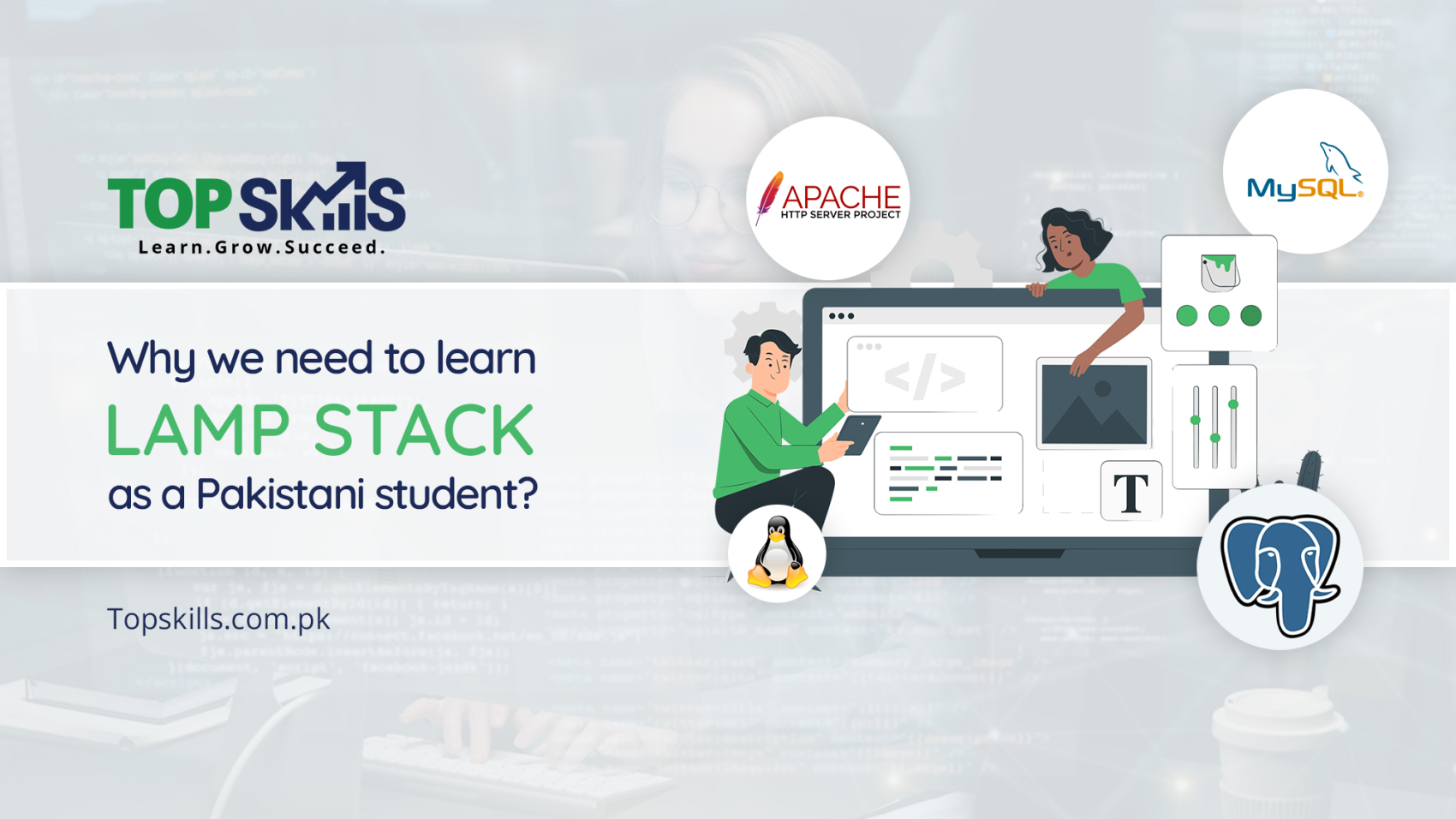
Why--we-need-to-learn-LAMP-stack-as-a-pakistani-student

Why  we need to learn LAMP stack as a Pakistani student

In today’s world, the technology industry is growing rapidly, and the demand for skilled professionals is increasing day by day. In Pakistan, the IT industry is also booming, and many young people are showing interest in pursuing a career in this field. If you are a Pakistani student interested in a career in IT, you must learn the LAMP stack. LAMP stands for Linux, Apache, MySQL, and PHP. It is an open-source web development platform that is widely used in the industry today. In this article, we will discuss why it is essential to learn the LAMP stack as a Pakistani student.

  1. Open-Source Technology:

LAMP stack is an open-source technology that means it is free to use and distribute. This is a significant advantage as it allows Pakistani students to learn and experiment with the technology without any financial burden. In addition, open-source technology offers more flexibility than proprietary software, and it is customizable, allowing developers to modify the software to meet their specific needs.

  1. Career Opportunities:

The LAMP stack is widely used in the IT industry, and many companies are looking for developers who are skilled in this technology. Learning the LAMP stack can open up a world of career opportunities for Pakistani students. In addition, many IT companies in Pakistan use the LAMP stack, and there is a high demand for professionals who are proficient in this technology.

  1. Easy to Learn:

The LAMP stack is easy to learn, especially for students who have some programming knowledge. This is because it is based on open-source technology, which has a vast community of developers who contribute to its development and provide support to new learners. The documentation is readily available, and there are many online resources that can help Pakistani students learn the LAMP stack quickly.

  1. Web Development:

Web development is one of the most in-demand skills in the IT industry today, and the LAMP stack is widely used in web development. By learning the LAMP stack, Pakistani students can develop web applications that are scalable and secure. This will make them more attractive to potential employers who are looking for skilled web developers.

  1. Cost-Effective:

As mentioned earlier, the LAMP stack is an open-source technology that is free to use and distribute. This makes it a cost-effective solution for developing web applications, especially for startups and small businesses. By learning the LAMP stack, Pakistani students can offer cost-effective solutions to their clients and help them save money on development costs.

  1. High Demand:

The LAMP stack is widely used in the IT industry, and there is a high demand for professionals who are skilled in this technology. Pakistani students who learn the LAMP stack can take advantage of this demand and secure high-paying jobs in the IT industry. This is a great opportunity for Pakistani students to build a successful career in the IT industry.

  1. Community Support:

The LAMP stack has a vast community of developers who contribute to its development and provide support to new learners. Pakistani students who learn the LAMP stack can join this community and get help from experienced developers. This will help them learn the technology faster and develop better applications.

  1. Versatility:

The LAMP stack is versatile and can be used for developing a wide range of web applications. This includes content management systems, e-commerce websites, social networking platforms, and more. By learning the LAMP stack, Pakistani students can develop applications that meet the needs of different industries and clients.

  1. Collaboration:

The LAMP stack is a collaborative technology that allows developers to work together on the same project. This is a great advantage for Pakistani students who want to work in teams and collaborate with other developers. By learning the LAMP stack, Pakistani students can develop the skills needed to work in a team environment and deliver high-quality applications.

  1. Future Growth:

The LAMP stack has been around for many years, and it is still widely used in the industry today. This means that learning the LAMP stack can provide Pakistani students with a solid foundation for their future growth in the IT industry. By mastering the LAMP stack, Pakistani students can develop the skills needed to keep up with the rapidly changing technology landscape and stay relevant in the industry.

Conclusion:

In conclusion, learning the LAMP stack is essential for Pakistani students who are interested in pursuing a career in IT. The LAMP stack is an open-source technology that is widely used in the industry today, and there is a high demand for professionals who are skilled in this technology. Pakistani students who learn the LAMP stack can take advantage of this demand and secure high-paying jobs in the IT industry. In addition, the LAMP stack is easy to learn, cost-effective, and versatile, making it an excellent choice for developing web applications. By learning the LAMP stack, Pakistani students can build a successful career in the IT industry and contribute to the development of innovative technologies that will shape the future.

Top-Skills-in-Pakistan-That-Are-Popular

Top Skills in Pakistan That Are Popular

The world of information technology is constantly evolving, and you need to stay up-to-date with the latest trends and technologies to ensure you remain in the race. So, IT professionals need to learn top skills to succeed in their careers. In Pakistan, the IT industry is rapidly growing, with a strong demand for skilled professionals in areas such as web development, mobile app development, data science, artificial intelligence, cloud computing, cybersecurity, and Internet of Things (IoT) development.

Let’s look at these skills and why they are essential in today’s IT industry.

1. MERN Stack

MERN stack is a collection of technologies used to build web applications, including MongoDB, Express.js, React, and Node.js. 

MongoDB is a NoSQL database, whereas Express.js is a web application framework for Node.js. React is a JavaScript library for building user interfaces, and Node.js is a runtime environment for JavaScript.

Now the most important question is: Why is the MERN stack important? First, the MERN stack is a popular and versatile technology stack used to build many web applications. Second, the MERN stack is in high demand, with many job opportunities and potential for career growth.

2. MEAN Stack

MEAN stack is another collection of technologies used to build web applications. It includes the same tech stack as MERN Stack, i.e., MongoDB, Express.js, Angular, and Node.js. 

MEAN Stack is a popular and versatile technology stack that can be used to build a wide range of web applications. Second, the MEAN stack is known for its speed, scalability, and ease of use. Third, the MEAN stack is widely used in the IT industry, bringing many opportunities for IT professionals and job seekers.

3. Python

Python is a high-level programming language used for web development, data analysis, artificial intelligence, and scientific computing. Python is best known for its simplicity, readability, and versatility.

Python is considered a top skill because of its popularity and versatile programming language that can be used in various industries and roles. Second, Python has a large and active community, with many libraries and tools available for developers. So, your career can be bright if you know Python.

4. LAMP Stack

LAMP stack is a collection of technologies used to build web applications. The LAMP stack includes Linux, Apache, MySQL, and PHP. Linux is an open-source operating system, Apache is a web server software, MySQL is a relational database management system, and PHP is a server-side scripting language.

LAMP stack is an open-source stack of software without programming tools. So, it is not regarded as a framework; it has an application server, database, and web server. Its components are interchangeable, so it makes it an easy-to-use stack for website building.

5. WordPress

WordPress is a popular content management system used for building websites, blogs, and online stores. WordPress is known for its ease of use, customization options, and a large ecosystem of plugins and themes.

WordPress is user-friendly, which makes it easy for non-technical users to manage their websites. Also, WordPress has a large and active community, with many resources available for developers and users.

Most businesses have built their websites on WordPress theme, so they always need a WordPress developer to maintain websites. If you are a WordPress geek, a vast array of opportunities are waiting for you.

6. React Native

React Native is a JavaScript framework for building mobile applications for iOS and Android platforms. React Native allows developers to build mobile apps using the same technology and codebase used for web development.

React Native is popular because of its scalability, as it is used to build cross-platform mobile applications. Moreover, it is known for its speed, performance, and ease of use. So, no wonder React Native developers are in high demand, and you can hit big in the market with its capabilities.

7. .NET

.NET is a framework for building web, desktop, and mobile applications. .NET includes a runtime environment, libraries, and tools for building applications using different programming languages, such as C#, VB.NET, and F#.

.NET is a versatile framework used to build a wide range of applications. Known for its performance, security, and scalability, .NET is in high demand in the IT industry. If your tilt is towards .NET, go ahead, and you will land strong career growth.

8. Java

Java is a high-class programming language for building web, desktop, and mobile applications. What makes Java one of a kind programming language is it has few implementation dependencies, and it’s a common language with many use cases. So, if you want to be a Java expert, you will have a wide horizon of opportunities.

Conclusion

In conclusion, the IT industry in Pakistan is rapidly growing, and there is a strong demand for skilled professionals in areas such as web development, mobile app development, data science, artificial intelligence, cloud computing, cybersecurity, and Internet of Things (IoT) development. By learning these in-demand IT skills, such as MERN stack, MEAN stack, Python, LAMP stack, WordPress, React Native, .NET, and Java, you can position yourself for a successful and rewarding career in the IT industry.